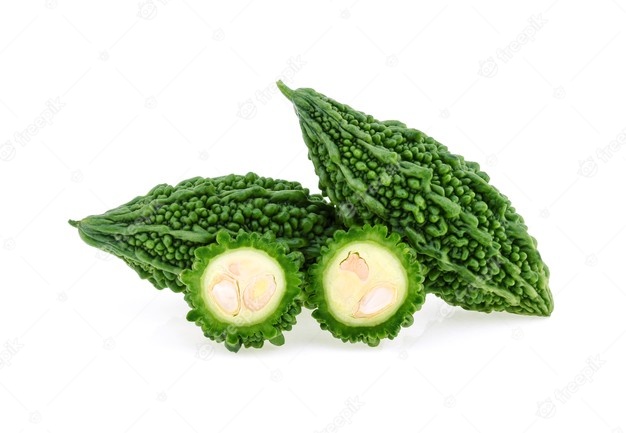
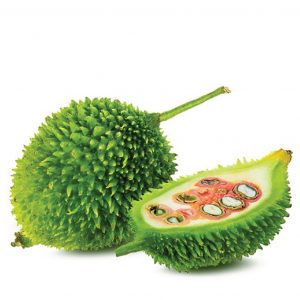
Bitter gourd (Momordica charantia) is one of the world’s major vegetable crops, which belongs to the family Cucurbitaceae. The genus Momordica is a native of the Paleotropics and comprises about 60 species. Bitter gourd grows in tropical and subtropical areas, including parts of East Africa, Asia, the Caribbean, and South America, where it is used not only as a food but also as a medicine. Two botanical varieties viz., var. charantia synonymous with large-fruited cultivated Chinese bitter melon and var. muricata representing small-fruited, predominantly wild forms were recognized. Wide variability was noticed especially among cultivated types for fruit and seed morphology. The plant is monoecious, annual climber with long-stalked leaves and yellow, solitary male and female flowers borne on the leaf axils. The warty and oblong or elliptical-shaped fruit is botanically a ‘pepo.’ The plant grows well in a variety of soils and begins flowering about one month after planting. It is used as a food, bitter flavoring, and medicine. Bitter gourd has a relatively high nutritional value due to high iron and ascorbic acid content. Indians have traditionally used the leaves and fruits as a medicine to treat diabetes, colic, and to heal skin sores and wounds. Bitter gourd is reported to possess antioxidant, antimicrobial, antiviral, and antidiabetic properties
Bitter gourd (Momordica charantia) is one of the world’s major vegetable crops, which belongs to the family Cucurbitaceae. The genus Momordica is a native of the Paleotropics and comprises about 60 species. Bitter gourd grows in tropical and subtropical areas, including parts of East Africa, Asia, the Caribbean, and South America, where it is used not only as a food but also as a medicine. Two botanical varieties viz., var. charantia synonymous with large-fruited cultivated Chinese bitter melon and var. muricata representing small-fruited, predominantly wild forms were recognized. Wide variability was noticed especially among cultivated types for fruit and seed morphology. The plant is monoecious, annual climber with long-stalked leaves and yellow, solitary male and female flowers borne on the leaf axils. The warty and oblong or elliptical-shaped fruit is botanically a ‘pepo.’ The plant grows well in a variety of soils and begins flowering about one month after planting. It is used as a food, bitter flavoring, and medicine. Bitter gourd has a relatively high nutritional value due to high iron and ascorbic acid content. Indians have traditionally used the leaves and fruits as a medicine to treat diabetes, colic, and to heal skin sores and wounds. Bitter gourd is reported to possess antioxidant, antimicrobial, antiviral, and antidiabetic properties






There are no reviews yet.